December 18, 2024
Local Men's Ministry Expands Food Bank to Serve 200 Additional Families Monthly
A faith-driven initiative demonstrates how organized compassion and community partnership can address growing food insecurity while strengthening spiritual bonds among volunteers.
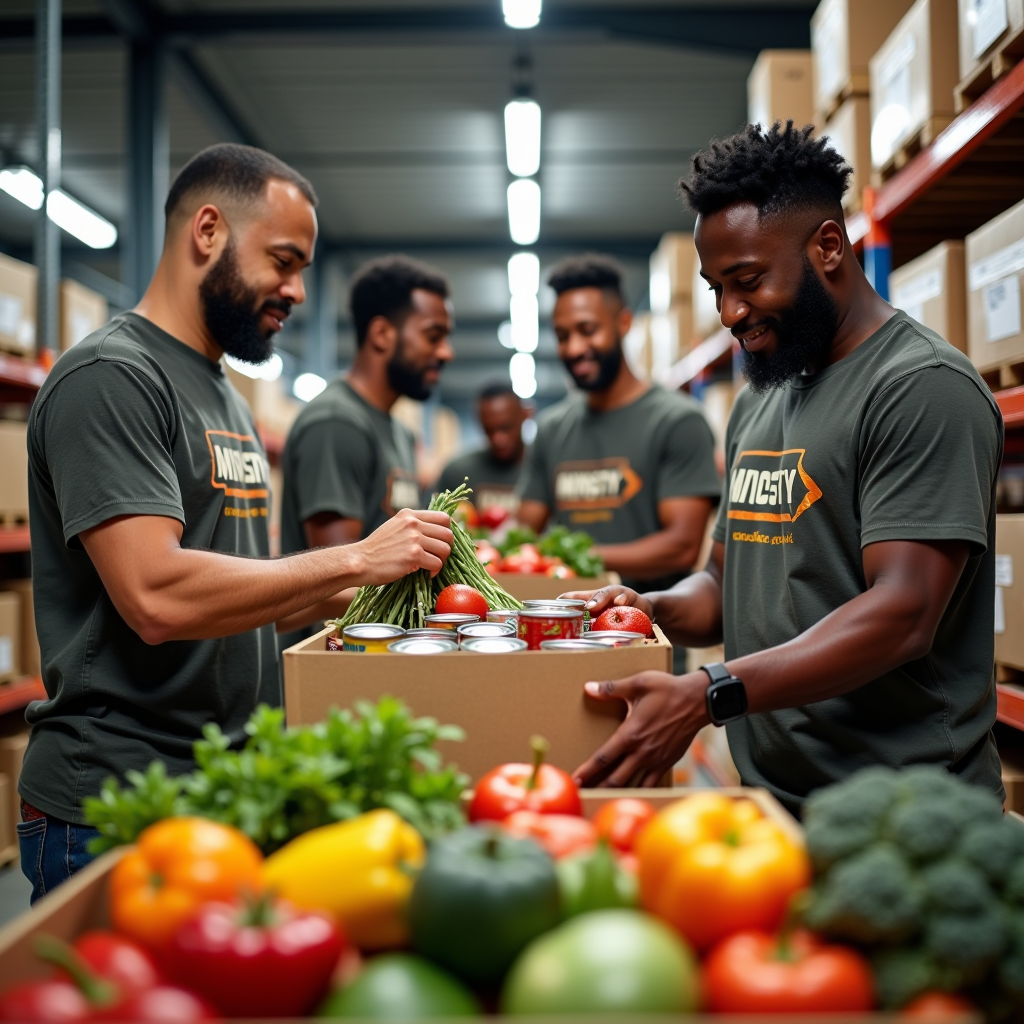
In a significant expansion of their community outreach efforts, the Cornerstone Men's Leadership Ministry announced this week that their food bank operations have grown to serve an additional 200 families each month, bringing their total monthly reach to over 450 households across the metropolitan area. This milestone represents not just an increase in numbers, but a testament to the power of faith-based community organizing and the dedication of men committed to serving their neighbors in need.
The expansion, which officially launched in early November, comes at a critical time when food insecurity continues to affect families throughout the region. According to recent data from the Regional Food Security Coalition, approximately 18% of households in the area experience some level of food insecurity, with that number rising to 24% among families with children. These statistics have motivated the men's ministry to transform their modest food distribution program into a comprehensive community resource.
Building a Foundation of Service
The journey to this expansion began three years ago when a small group of men from various local churches recognized a growing need in their community. What started as a monthly food distribution serving 30 families has evolved into a sophisticated operation that combines logistical excellence with spiritual purpose. The ministry's founder, Marcus Thompson, reflects on those early days with gratitude and amazement at how far the organization has come.
"We started with five guys loading boxes out of a church basement," Thompson recalls. "We had no idea it would grow into what we see today. But we knew God was calling us to do something, and we trusted that if we were faithful in the small things, He would provide opportunities for greater impact."
That faith has been rewarded with steady growth, but the recent expansion required careful planning and significant organizational development. The ministry spent six months preparing for the increased capacity, developing new systems for volunteer coordination, food sourcing, and distribution logistics. They also invested in leadership training for their core team, ensuring that the spiritual foundation of their work would remain strong even as operations scaled up.
Organizational Structure and Volunteer Coordination
The success of the expanded food bank operations relies on a well-organized structure that maximizes volunteer effectiveness while maintaining the personal touch that defines the ministry's approach. The organization now operates with four distinct teams, each led by experienced coordinators who report to a central leadership council.
The Procurement Team, consisting of 12 dedicated volunteers, manages relationships with food suppliers, grocery stores, and wholesale distributors. They coordinate weekly pickups of donated items and negotiate bulk purchases of staple goods. This team has developed partnerships with three major grocery chains that donate items approaching their sell-by dates, as well as relationships with local farmers who contribute fresh produce during harvest seasons.
The Logistics Team handles the complex task of receiving, sorting, and storing food donations. Operating out of a 5,000-square-foot warehouse space donated by a local business owner, this team of 20 volunteers works in rotating shifts to ensure proper food handling and inventory management. They've implemented a tracking system that monitors expiration dates, nutritional balance, and family preferences, allowing for more personalized food packages.
The Distribution Team represents the public face of the ministry, with 35 volunteers who staff the twice-weekly distribution events. These men don't simply hand out boxes; they take time to learn names, ask about families, and offer prayer when welcomed. Many recipients have commented that the dignity and respect shown during distribution is as valuable as the food itself.
Finally, the Outreach and Partnership Team works to identify families in need, coordinate with social service agencies, and maintain relationships with the 17 partner churches that support the ministry. This team of 8 volunteers ensures that the food bank reaches those who need it most while avoiding duplication of services with other community organizations.
Key Statistics
- 75 active volunteers serving across four teams
- 450 families served monthly (up from 250)
- 17 partner churches providing support and referrals
- 12,000 pounds of food distributed weekly
- 5,000 square feet of warehouse space
Partnership with Local Churches
The expansion would not have been possible without the robust network of church partnerships that the ministry has cultivated. These 17 congregations, representing various denominations and traditions, contribute in multiple ways that go beyond financial support. Each partner church designates a liaison who helps identify families in need within their congregation and surrounding community, ensuring that assistance reaches those who might not otherwise seek help.
Several churches have committed to providing volunteer teams on specific weeks, creating a sustainable rotation that prevents burnout among individual volunteers. Others contribute by hosting satellite distribution points in their facilities, making food access more convenient for families in different neighborhoods. This decentralized approach has been particularly effective in reaching elderly residents and those without reliable transportation.
Pastor David Chen of Riverside Community Church, one of the founding partner congregations, emphasizes the mutual benefits of this collaboration. "This partnership has energized our men's ministry in ways we never anticipated," he explains. "Our guys come back from their volunteer shifts talking about the relationships they're building and the ways they're seeing God work. It's transformed how we think about service and discipleship."
The partnership model also includes regular coordination meetings where church leaders and ministry coordinators share insights, address challenges, and pray together. These gatherings have fostered a sense of unity across denominational lines, with participants noting that working together on practical service has built bridges that theological discussions alone might not have achieved.
The Spiritual Foundation of Service
While the operational aspects of the food bank are impressive, the leadership emphasizes that the ministry's true foundation is spiritual. Every volunteer shift begins with a brief devotional and prayer time, grounding the work in the biblical call to serve "the least of these." The ministry has developed a discipleship curriculum specifically for volunteers, exploring themes of compassion, stewardship, and servant leadership through the lens of Scripture.
James Rodriguez, who coordinates the volunteer training program, explains the intentional integration of faith and service. "We're not just running a food bank; we're forming men who understand that their identity is rooted in being servants of Christ," he says. "When you see yourself as stewarding God's resources to care for His children, it changes everything about how you approach the work."
This spiritual emphasis extends to how volunteers interact with food bank recipients. While the ministry respects that not everyone shares their faith tradition, volunteers are trained to offer prayer and spiritual encouragement when appropriate, always with sensitivity and respect. Many recipients have expressed appreciation for this holistic approach, noting that having someone care about their spiritual well-being as well as their physical needs has been deeply meaningful.
The ministry also provides opportunities for recipients to become volunteers themselves, creating pathways for those who have received help to give back to their community. Several current team leaders are men who first encountered the ministry as recipients during difficult seasons of their lives. Their testimonies of transformation—both material and spiritual—inspire other volunteers and demonstrate the ministry's commitment to dignity and empowerment rather than dependency.
Addressing Food Insecurity in the Region
The ministry's expansion comes against a backdrop of persistent food insecurity that affects thousands of families in the metropolitan area. Recent studies by the Regional Food Security Coalition reveal troubling trends that underscore the importance of initiatives like this food bank. The data shows that 18% of all households in the region experience some level of food insecurity, meaning they lack consistent access to adequate food for an active, healthy life.
The situation is more acute for certain populations. Families with children face a 24% food insecurity rate, while single-parent households experience rates approaching 35%. Senior citizens living on fixed incomes represent another vulnerable group, with 16% reporting difficulty affording adequate nutrition. These statistics translate to real people facing difficult choices between food and other necessities like medication, utilities, or rent.
Economic factors contributing to food insecurity in the area include stagnant wages that haven't kept pace with rising costs of living, the prevalence of part-time and gig economy work that lacks benefits, and the high cost of housing that leaves many families with little budget flexibility. The COVID-19 pandemic exacerbated these challenges, and while the acute crisis has passed, many families continue to struggle with its economic aftermath.
The men's ministry food bank addresses these challenges through a comprehensive approach that goes beyond emergency food provision. They partner with nutritionists to ensure that distributed food packages meet dietary guidelines and include fresh produce whenever possible. They also connect families with other resources, including job training programs, financial counseling, and healthcare services, recognizing that food insecurity is often intertwined with other challenges.
Regional Food Insecurity Statistics
18%
Overall household food insecurity rate
24%
Families with children affected
35%
Single-parent households struggling
Future Expansion Plans and Vision
The recent expansion to serve 200 additional families represents a significant milestone, but the ministry's leadership views it as a stepping stone toward even greater impact. They have developed a three-year strategic plan that envisions serving 750 families monthly by 2027, along with launching complementary programs that address the root causes of food insecurity.
One key initiative in development is a job readiness program that will help food bank recipients develop skills and connections needed for stable employment. The ministry has begun conversations with local businesses about creating a network of employers committed to providing opportunities for program graduates. This approach recognizes that while emergency food assistance is crucial, long-term solutions require addressing economic stability.
The ministry also plans to expand its fresh produce offerings through the development of community gardens at several partner church sites. These gardens will not only provide nutritious food for distribution but also create opportunities for recipients to learn gardening skills and participate in growing their own food. Several volunteers with agricultural backgrounds have already begun planning the garden layouts and developing a curriculum for teaching sustainable gardening practices.
Another exciting development is the planned launch of a mobile food pantry that will bring services directly to underserved neighborhoods. The ministry has identified several areas where transportation barriers prevent families from accessing the main distribution center. A donated refrigerated truck is being retrofitted to serve as a mobile pantry, with plans to visit different neighborhoods on a rotating schedule beginning in spring 2025.
Financial sustainability remains a priority as the ministry grows. While donations from partner churches and individual supporters have been generous, the leadership recognizes the need for diversified funding sources. They are exploring grant opportunities from foundations focused on food security and community development, while also developing a planned giving program that will create long-term financial stability.
The ministry is also investing in technology infrastructure to improve efficiency and impact measurement. A new database system will better track family needs, volunteer hours, and food distribution patterns, providing data that can inform program improvements and demonstrate impact to potential funders. This investment in systems and processes reflects the leadership's commitment to professional excellence in service of their mission.
Impact Beyond Numbers
While statistics and operational details tell an important part of the story, the true impact of the ministry's work is best understood through the lives it touches. Volunteers consistently report that their service has deepened their faith and given them a renewed sense of purpose. Many describe how the relationships formed through the food bank have challenged their assumptions and expanded their understanding of community.
Michael Stevens, a volunteer who joined the ministry six months ago, shares how the experience has transformed his perspective. "I came thinking I was going to help people, but I've received so much more than I've given," he reflects. "The families we serve have taught me about resilience, gratitude, and faith in ways that church services never could. This work has made my faith real and practical."
Recipients of the food bank services express similar sentiments about the impact on their lives. Beyond the obvious benefit of having adequate food, many speak about the dignity and respect they experience during distributions, the friendships formed with volunteers, and the hope that comes from knowing their community cares about their well-being. Several families have shared that the ministry's support during difficult times prevented them from falling into deeper crisis and gave them the stability needed to work toward long-term solutions.
The ripple effects extend into the broader community as well. Partner churches report increased engagement in their men's ministries and a renewed focus on practical service. Local businesses that donate food or resources have become more aware of food insecurity issues and have expanded their community involvement. Social service agencies appreciate having a reliable partner for addressing food needs, allowing them to focus their resources on other aspects of family support.
"We started with five guys loading boxes out of a church basement. We had no idea it would grow into what we see today. But we knew God was calling us to do something, and we trusted that if we were faithful in the small things, He would provide opportunities for greater impact."
— Marcus Thompson, Ministry Founder
As the Cornerstone Men's Leadership Ministry celebrates this expansion milestone, the leadership remains focused on their core mission: serving their neighbors with excellence while growing as disciples of Christ. The increased capacity to serve 200 additional families monthly represents not just organizational growth, but a deepening commitment to the biblical mandate to care for those in need.
The success of this initiative demonstrates what can be accomplished when men of faith unite around a common purpose, combining practical skills with spiritual conviction. It shows that addressing complex social challenges like food insecurity requires both compassionate hearts and organized systems, both prayer and planning, both faith and action.
For the 75 volunteers who make this work possible, the expansion represents an opportunity to deepen their impact and live out their values in tangible ways. For the 450 families now served each month, it means reliable access to nutritious food and the dignity of being seen and valued by their community. For the partner churches and supporting organizations, it demonstrates the power of collaboration and shared mission.
As the ministry looks toward future growth and new initiatives, the foundation remains unchanged: men committed to serving others, motivated by faith, and organized for maximum impact. The expansion to serve 200 additional families is a significant achievement, but for those involved, it's simply the next step in a journey of faithful service that continues to transform both those who give and those who receive.
The story of this men's ministry food bank expansion offers hope and inspiration for communities everywhere facing similar challenges. It proves that ordinary people, united by purpose and guided by faith, can create extraordinary change. As food insecurity continues to affect millions of families across the nation, initiatives like this one provide a model for how faith communities can respond with both compassion and competence, meeting immediate needs while working toward lasting solutions.